
There are many nutrition myths that circulate around the Internet, and myths about meat are included in them. Some people have concerns that may be health-related, or that relate to animal welfare and the environment. Can meat be part of a healthy diet? Are there unintended nutrition consequences to not eating meat? How are livestock animals actually treated? And what about the impact agriculture has on the environment.
Everyone is entitled to make their own choice, but I wanted to share some quick facts and figures that may help you with your choice.
Health Benefits
There are health benefits to consuming meat:
- Meat (beef, pork, poultry) is a good source of protein and B vitamins (B12 and B6 and niacin), riboflavin, iron and zinc.
- Due to improved agricultural practices.60% of beef cuts today are considered “Lean” by definition.
- Meat can be part of a healthy diet, according to the American Heart Association, as long as sodium, saturated fat, and calories are within guidelines. The DASH Diet allows small portions of meat to be incorporated into your eating plan.
- In some cases, there may be risks for eliminating meat. B12 deficiency are common in vegetarian diets, so vegetarian diets, especially vegan diets, need to be planned accordingly.
Animal Welfare Myths
There are many myths about the treatment of livestock. You may hear people talk about animal mistreatment, or the idea that pigs shouldn’t be in stalls or barns, chickens should all be ‘cage-free’ , or that cows are only meant to eat grass. Unfortunately it’s true that some operations may not be perfect, but animal cruelty seems to be the rare exception, not the rule. And there are guidelines in place to ensure animals are treated humanely, as well as consequences if they aren’t followed.
- Under the Humane Methods of Slaughter Act (enacted in 1958 and revised in 1978), all livestock must be treated humanely. All animals must have water at all times, be fed properly (most farms employ a Veterinarian who prescribes feed which delivers precise nutrition), and be handled humanely in a way that does not cause stress.
- No other sector of animal agriculture has the level of oversight that the US Meat packing industry has. USDA inspectors are required by law to be in a meat packing facility any time it’s running. If a plant fails an audit, suspensions and fees apply, and contracts may be lost.
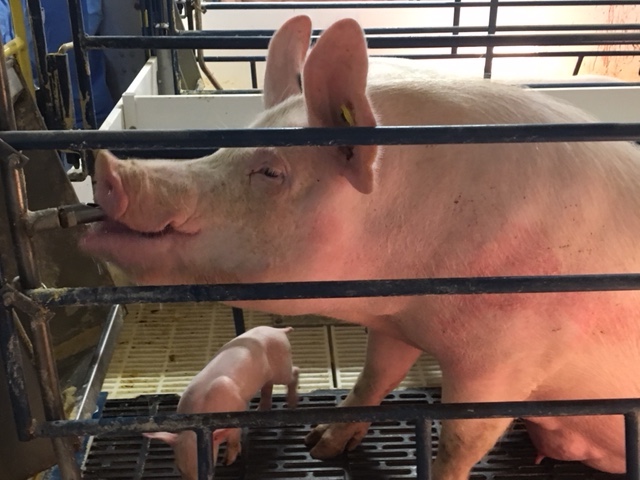
To address how the environment may impact stress levels in pigs, the American Veterinary Medical Association found that all pig production systems had no significant difference in the stress levels of sows (pregnant pigs), no matter their environment (barns, stalls, indoors or outdoors). While no one system is perfect, and all may have some disadvantages, stalls seem to work well for sows.
Used properly, sow stalls can “minimize aggression and injury, reduce competition, allow individual feeding and assist in control of body condition.”
While no one system is perfect, and all may have some disadvantages, stalls seem to work well for sows. The most critical part of animal care is the farmer. It’s the farmer’s day to day care for the animals, and not the pigs physical environment seem to matter most. Farmers understand their animals, and their behavior, even though their are advantages and disadvantages to all systems. Also, not only is it humane to treat animals properly, but optimal animal handling results in higher quality meat.
Temple Grandin: Animal Behaviorist
Temple Grandin, PhD is an animal welfare expert and a professor of animal science at Colorado State University. In addition to creating physical structures to manage cows that reduces their stress levels and improves animal and farmer safety (both for medical check ups and to slaughter), she also has written standards for the industry.
“There a certain percentage of people who shouldn’t be handling animals,” she says. “…They shouldn’t be there. But there’s an even bigger percentage that know what the right thing to do is, when they see it. They just need to be taught.” ~Temple Grandin
How Much Water?
There are lots of myths about how much water it takes to produce meat. I think it’s also important to realize that cattle produce many other products and ingredients for other industries beyond beef.
If you do an Internet search, you’ll find numbers from 300 gallons per pound to 1600 gallons per pound. The measurement of water use involves a lot of variables. Some numbers include the water used to grow feed, and the pollution produced. There are 3 types of water:
- Blue Water: Surface water and groundwater (lakes, rivers, aquafors)
- Green Water: Rainwater and water held in soil
- Grey Water: The water from agricultural runoff or leaching from the soil (at home, it’s the water that goes down your drain after a bath, shower, or doing dishes)
Other Environmental Impacts
- According to the North American Meat Institute, it takes 1675 gallons of water to make a pound of beef. All food production requires water. However, not all water has the same importance when it comes to sustainability.
- Beef producers have improved significantly, and one way farmers conserve water is by feeding cows grain. Interestingly, many people believe that cows should only eat grass, but all cows do eat grass, however some are finished with grain (cows are ruminants and can handle a change in diet as long as the pH of their rumen stays in check). Animals fed grain grow to market size over 200 days faster than grass fed ones, which likely conserves water.
- Greenhouse gas from livestock is only part of the environmental impact of emissions. US Environmental Protection Agency data show that all of agriculture contributes about 10% of total US greenhouse gas emissions, with animal agriculture contributing about 4%. To put this into more perspective, transportation accounts for 28 percent, and electric power 25 percent.
Summary Points
- Everyone can choose to be an omnivore or a vegan. That’s an individual choice, and there’s no need to shame either.
- Lean meat, in small portions, and consumed within the recommended limits for sodium, saturate fat, and calories, can be part of a healthy diet.
- Eliminating meat may have unintended nutrition consequences. Simply declaring “I’m not eating meat” is not a healthy vegetarian diet plan.
- US Animal Agriculture has come a long way over the years and today is able to produce leaner cuts of beef and pork while raising animals in a humane way. US Farmers have a vested interest in protecting the environment in which they live, and as a whole, continue to produce food using less resources than ever before. Like any industry, they are continually looking for ways to improve and do the right thing.
- The bottom line is really about smaller portions (of everything).


These are all lies! Do your research. The government, FDA, and pharmecutical companies are all in on this. The fact that they can lie about this stuff is so sickening.